
German Shepherds are not only known for their intelligence, loyalty, and working ability, but also for their beautiful and varied coats. If you’re considering adding one of these incredible dogs to your family or already own one, it’s important to understand the different types of coats German Shepherds can have—especially if you live in a state like Maine, where weather conditions can vary drastically throughout the year.
Whether you’re looking at adult German Shepherds or shopping for German Shepherd puppies, coat type can affect grooming needs, shedding, and even how well your dog tolerates the weather in Maine.

1. Short Coat (Stock Coat)
The short coat, also known as the “stock coat,” is the most common type seen in working line German Shepherds. These coats lie close to the body and have a dense undercoat.
Pros:
- Easier to maintain
- Dries quicker after getting wet
- Preferred in working environments (police, military)
Cons:
- Sheds year-round
- Still requires regular grooming
Weather in Maine Consideration:
Short-coated German Shepherds do well in most seasons but may need extra protection during Maine’s harsh winters. A dog coat or limiting time outdoors in subzero temperatures can help.
2. Medium Coat
This type falls between short and long coats. It’s common in both show and working lines and features a slightly fuller outer coat, with tufts around the ears and backs of the legs.
Pros:
- Offers slightly more insulation
- Has a balanced appearance
- Still relatively easy to maintain
Cons:
- Sheds heavily, especially during spring and fall
- Needs brushing 2–3 times a week
Weather in Maine Consideration:
The medium coat provides better cold resistance than a short coat, making it more suitable for chilly months. However, summer grooming is essential to prevent overheating.
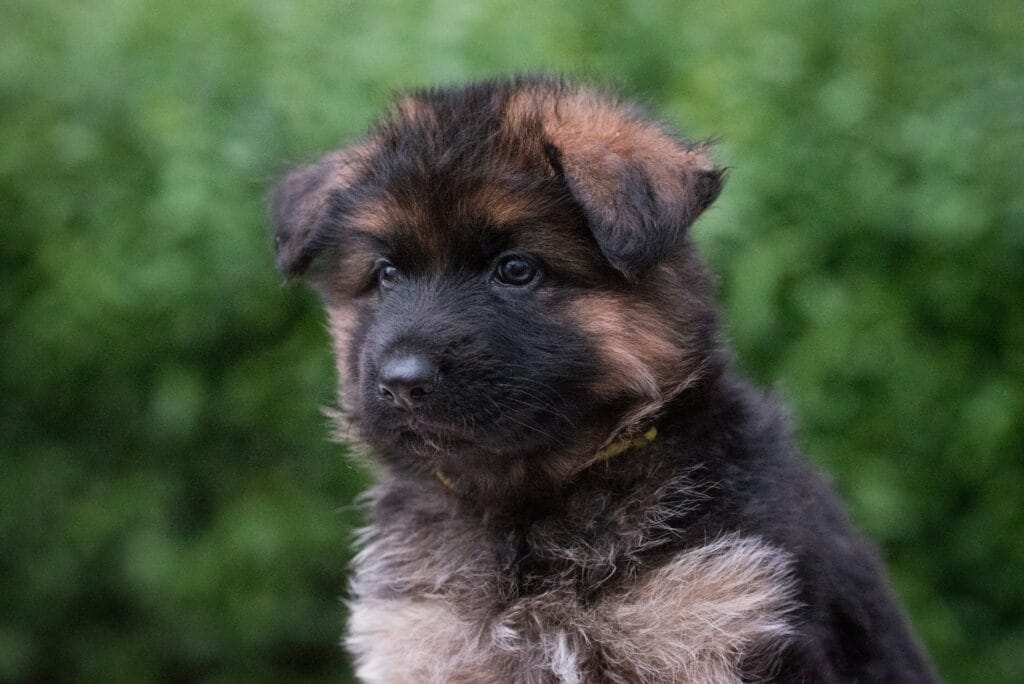
3. Long Coat (Long Stock Coat)
Long-coated German Shepherds have flowing hair that’s especially noticeable around the ears, tail, and legs. There are two varieties here:
- With undercoat (recognized by AKC)
- Without undercoat (not typically accepted in conformation shows)
Pros:
- Gorgeous, flowing appearance
- Very soft and silky
Cons:
- High grooming needs (daily brushing recommended)
- Tends to collect dirt and debris more easily
- Not always ideal for field work or rugged environments
Weather in Maine Consideration:
This is where long coats shine. The thick insulation helps German Shepherds stay warm during snowy and windy winters. Just make sure they stay cool and hydrated in Maine’s humid summers.
For a detailed overview of the official German Shepherd coat types and breed standard, visit the American Kennel Club’s German Shepherd page.
Final Thoughts: Which Coat is Best for You?
Choosing between German Shepherd puppies with different coat types depends on your lifestyle, grooming commitment, and local climate. If you live in Maine, where temperatures can drop significantly in the winter and summers can be muggy, a medium or long coat may be more practical—provided you can commit to regular grooming.
Regardless of coat type, all German Shepherds share the same incredible qualities that make them one of the most loved and loyal breeds in the world.
Looking for the Perfect Puppy?
At Pine Hill German Shepherds, we specialize in breeding healthy, temperamentally sound German Shepherd puppies with strong working lines and gorgeous coats that are well-suited to families living in climates like the weather in Maine. Reach out today to learn more about our upcoming litters!
Understanding the Different Coat Types in German Shepherds: What You Need to Know
German Shepherds are not only known for their intelligence, loyalty, and working ability, but also for their beautiful and varied coats. If you’re considering adding one of these incredible dogs to your family or already own one, it’s important to understand the different types of coats German Shepherds can have—especially if you live in a state like Maine, where weather conditions can vary drastically throughout the year.
Whether you’re looking at adult German Shepherds or shopping for German Shepherd puppies, coat type can affect grooming needs, shedding, and even how well your dog tolerates the weather in Maine.
1. Short Coat (Stock Coat)
The short coat, also known as the “stock coat,” is the most common type seen in working line German Shepherds. These coats lie close to the body and have a dense undercoat.
Pros:
- Easier to maintain
- Dries quicker after getting wet
- Preferred in working environments (police, military)
Cons:
- Sheds year-round
- Still requires regular grooming
Weather in Maine Consideration:
Short-coated German Shepherds do well in most seasons but may need extra protection during Maine’s harsh winters. A dog coat or limiting time outdoors in subzero temperatures can help.
2. Medium Coat
This type falls between short and long coats. It’s common in both show and working lines and features a slightly fuller outer coat, with tufts around the ears and backs of the legs.
Pros:
- Offers slightly more insulation
- Has a balanced appearance
- Still relatively easy to maintain
Cons:
- Sheds heavily, especially during spring and fall
- Needs brushing 2–3 times a week
Weather in Maine Consideration:
The medium coat provides better cold resistance than a short coat, making it more suitable for chilly months. However, summer grooming is essential to prevent overheating.
3. Long Coat (Long Stock Coat)
Long-coated German Shepherds have flowing hair that’s especially noticeable around the ears, tail, and legs. There are two varieties here:
- With undercoat (recognized by AKC)
- Without undercoat (not typically accepted in conformation shows)
Pros:
- Gorgeous, flowing appearance
- Very soft and silky
Cons:
- High grooming needs (daily brushing recommended)
- Tends to collect dirt and debris more easily
- Not always ideal for field work or rugged environments
Weather in Maine Consideration:
This is where long coats shine. The thick insulation helps German Shepherds stay warm during snowy and windy winters. Just make sure they stay cool and hydrated in Maine’s humid summers.
For a detailed overview of the official German Shepherd coat types and breed standard, visit the American Kennel Club’s German Shepherd page.
Final Thoughts: Which Coat is Best for You?
Choosing between German Shepherd puppies with different coat types depends on your lifestyle, grooming commitment, and local climate. If you live in Maine, where temperatures can drop significantly in the winter and summers can be muggy, a medium or long coat may be more practical—provided you can commit to regular grooming.
Regardless of coat type, all German Shepherds share the same incredible qualities that make them one of the most loved and loyal breeds in the world.
Looking for the Perfect Puppy?
At Pine Hill German Shepherds, we specialize in breeding healthy, temperamentally sound German Shepherd puppies! Contact us today! We’d love to talk with you!