

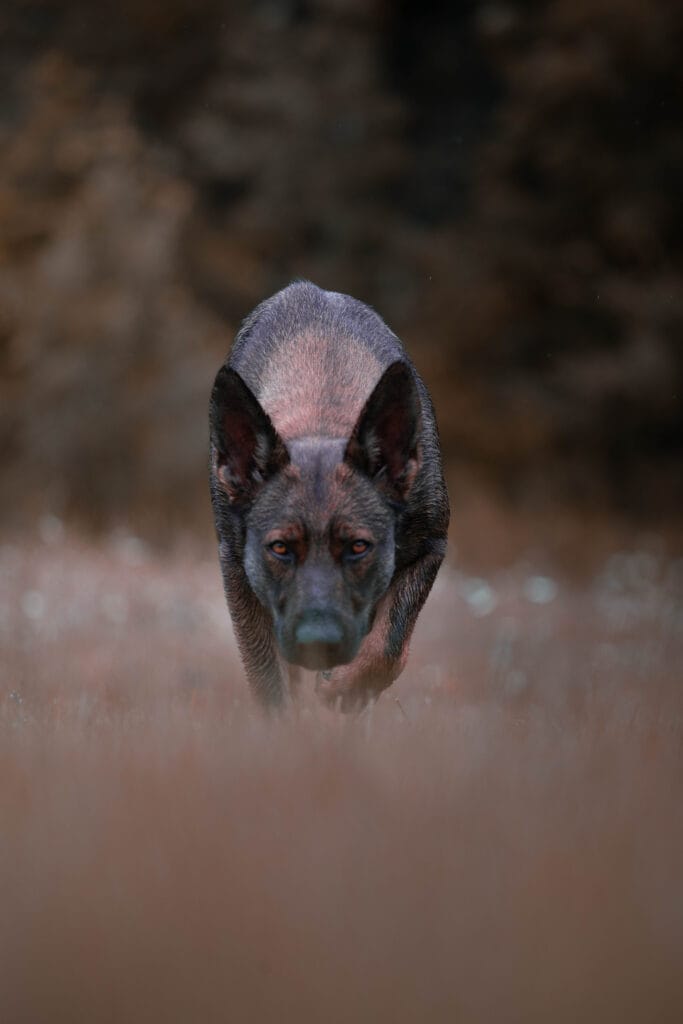
Temperament is the single most important factor influencing behavior, stability, and long-term success. While pedigree and appearance often get attention, temperament determines whether a dog can adapt, think clearly, and remain confident in real-world environments. Dogs with balanced temperaments are stable, resilient, and capable of handling stress without panic or overreaction. When temperament is weak, even well-trained dogs can struggle with anxiety, instability, or poor recovery from pressure. Responsible breeders, should prioritize temperament because it cannot be created through training—it must be inherited and properly developed.
What German Shepherd Temperament Really Means
German Shepherd temperament refers to emotional stability, confidence, and natural response to stress. It determines how a dog reacts to new environments, people, and challenges.
Signs of strong German Shepherd temperament include:
- Calm confidence in unfamiliar situations
- Willingness to engage without fear
- Fast recovery from stress
- Clear thinking under pressure
- Balanced, predictable reactions
Dogs with stable temperament remain composed instead of becoming fearful, reactive, or unstable.

Why Genetics Determine German Shepherd Temperament
Genetics are the foundation of German Shepherd temperament. According to the American Kennel Club, inherited traits play a major role in emotional stability and behavior.
Dogs with strong genetic temperament naturally show:
- Confidence and resilience
- Ability to adapt to new environments
- Emotional stability under stress
- Strong engagement and trainability
Training can develop temperament, but it cannot replace weak genetics. This is why breeder selection is critical.
Temperament vs Training: Understanding the Difference
German Shepherd temperament and training are not the same. Training teaches behavior, while temperament determines stability.
A dog with strong temperament learns faster, adapts more easily, and remains stable under pressure. A dog with weak temperament may struggle regardless of training level.
Temperament determines potential. Training develops it.

How Early Development Strengthens Temperament
Early development reinforces natural German Shepherd temperament. The first 8 weeks are especially important for building confidence and stress tolerance.
Proper early development helps puppies develop:
- Environmental confidence
- Emotional stability
- Strong recovery from stress
- Calm, balanced behavior
This early foundation shapes long-term stability.
Why German Shepherd Temperament Matters
Temperament effects daily life, trainability, and reliability. Dogs with stable temperament are easier to train, easier to live with, and more predictable.
Strong temperament produces dogs that are:
- Confident and stable
- Adaptable to new environments
- Mentally resilient
- Reliable working or family dogs
Temperament is the foundation of everything. German Shepherd temperament determines whether a dog becomes stable, confident, and reliable. While training and environment matter, genetics and early development play the largest role. When temperament is prioritized, German Shepherds are capable of adapting, learning, and succeeding in any role. Here at Pine Hill German Shepherds we prioritize early puppy development and training.