German Shepherd puppy training starts the moment the crate door opens in your driveway, whether you meant to start or not. This breed learns constantly, so your puppy will form habits during month one either way. The families who end up with easy adult dogs are the ones who decided in advance which habits those would be.

1. Make the Crate a Good Place
Feed every meal in the crate with the door open for the first few days. Toss treats in when the puppy is not looking. A crate that predicts food and quiet becomes a place your dog puts itself, and that is worth more than any command you teach this month.
2. Run the Potty Schedule Like a Clock
Outside after waking, after eating, after play and every hour in between while awake. Go to the same spot, wait, mark the moment it happens, then reward. Accidents inside are a scheduling failure rather than a puppy failure, so tighten the schedule rather than the correction.
3. Charge the Name
Say the name once, then pay when the head turns. Ten repetitions a day for a week and you will have a puppy that snaps around for you across a field. Never use the name for anything the puppy dislikes, or you will spend a year undoing it.
4. Teach Hand Feeding
Deliver a portion of every meal from your hand during short sessions. Food from your hand builds engagement, and engagement is the foundation of all German Shepherd puppy training that follows. It also makes you far more interesting than the environment, which is the whole battle at four months.
5. Two Minute Sessions, Several a Day
Puppies learn in short bursts. Two minutes of sit, name and hand touch, then stop while the puppy still wants more. Six of those beats one twenty minute session every time.
IMAGE 2
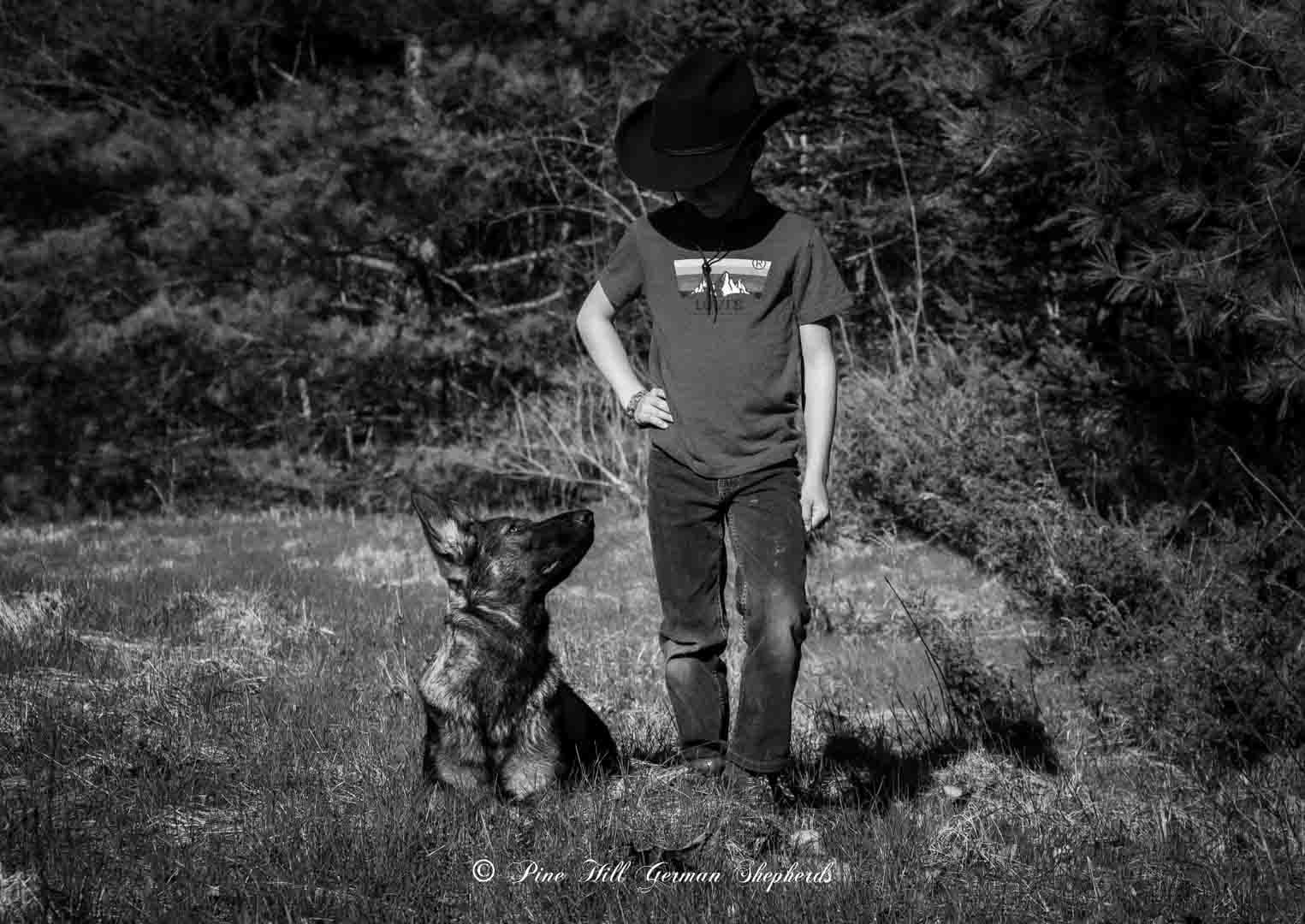
Fileworking-line-german-shepherd-puppy-leash-training-maine.jpg
AltWorking line German Shepherd puppy learning leash pressure in a Maine yard during training.
CaptionLeash work starts in the yard long before it starts in town.
6. Introduce the Leash Indoors First
Let the puppy drag a light leash around the house under supervision. Then pick it up and reward any step toward you. Pulling never starts on the sidewalk. It starts when a puppy learns that leaning into pressure moves it forward.
7. Manage the Teeth
Puppy biting is normal and it peaks right when families lose patience. Redirect to a toy every time, end play calmly when teeth land on skin, and give the puppy far more chewing outlets than it needs. Most puppies who bite hard at ten weeks are simply overtired, so check the nap schedule before you assume a behavior problem.
8. Enforce Naps
A puppy this age needs a great deal of sleep, and the household usually does not provide enough of it. Crate the puppy for a nap every couple of hours whether it seems tired or not. Half the behavior calls we field in the first month are solved by sleep alone.
9. Practice Being Alone
Ten minutes in the crate while you are in the next room. Then twenty. Then a trip to the mailbox. Building tolerance for alone time in month one prevents a much larger problem in month six, and it is easiest to teach while the puppy is still new to the house.
10. Keep Socializing Alongside the Training
Training and exposure work together. New places, new surfaces and new people belong in month one, handled carefully. Our post on early puppy socialization covers how to do that safely before vaccinations are complete, and the AKC German Shepherd training timeline maps what comes after this first month.
What This Breed Needs That Others Do Not
Shepherds want a job. A young Shepherd with no work becomes a Shepherd with a self assigned job, and that job is usually loud. Add scent games, food puzzles and short structured sessions to the physical exercise. Mental work tires this breed faster than a long run, and the range of sports this breed excels at gives you plenty to grow into.
When You Want a Head Start
Not every family wants to run the first months from scratch, and that is a good reason to look at our K9 Scholars program. We hold two spots in each litter for puppies that stay with us for advanced obedience in our home and go to their families already well started.
Freda’s fall 2026 litter arrives at the end of September, and every puppy leaves us with crate exposure, handling and early socialization already underway. Reserve a puppy and we will send you our first month plan when your position comes up.