

Most of the phone calls we get start the same way. Somebody has been reading about German Shepherds for a month, they have seen the phrase working line German Shepherd a hundred times, and they want to know if that is the dog they should get or the one they should avoid. It depends on the house, not the dog. This is the answer we give on the phone, written down, with the seven differences that actually change your life and a way to decide.
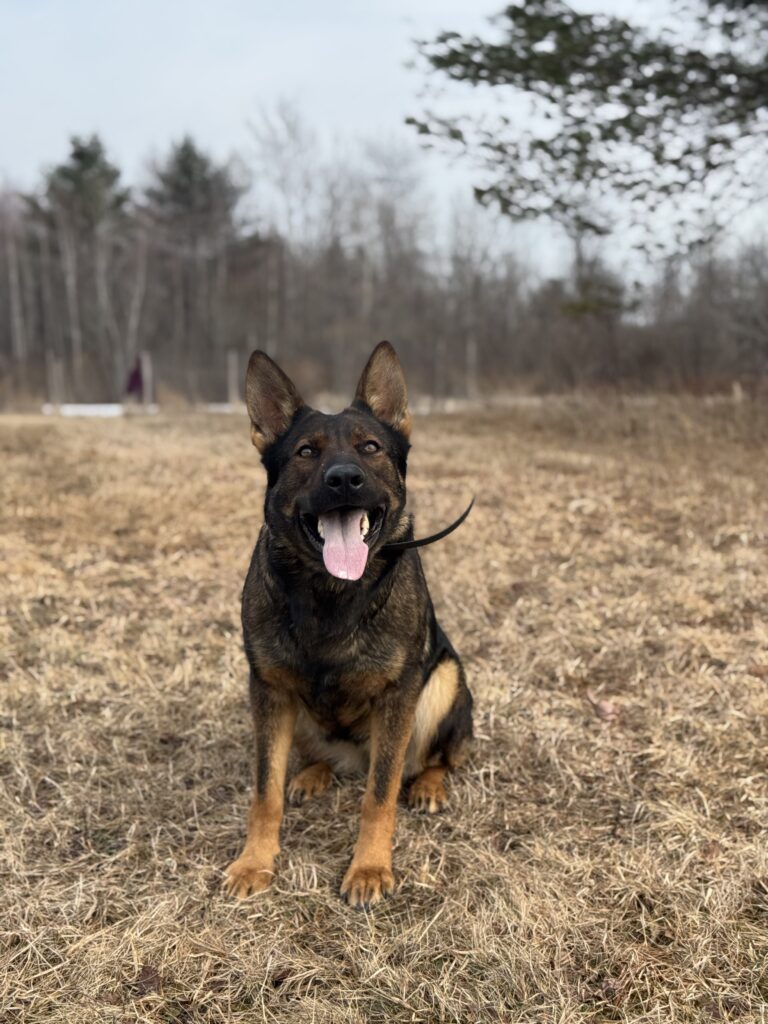
Table of Contents

What a Working Line German Shepherd Is Bred For
Breeders on the working side judge a dog by what it does. The order we care about at our place is nerve first, then drive, then structure, then how easy the dog is to train. Colour comes last, which is why you see so many sable and black working line German Shepherds and so few in the ring.
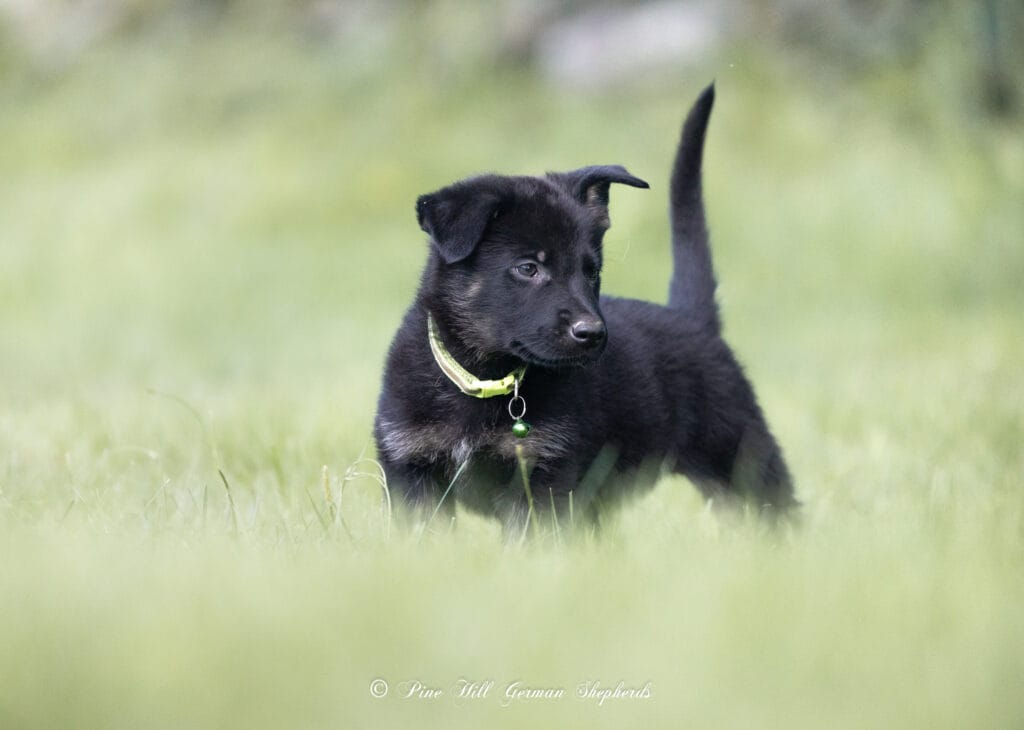
Nerve is the one people underestimate. A dog with good nerve startles when a pan hits the floor, shakes it off in a second, and walks over to sniff the pan. A dog with poor nerve startles and stays startled. You can see it in a seven week old puppy if you know what to look for, and it does not change much with age.
Drive is the wish to work with you. In a litter it looks like the puppy that keeps bringing the toy back after the others have quit. In a grown dog it looks like a shepherd that would rather track a scent through wet woods than lie on the porch. The AKC breed page describes one German Shepherd, but the working side has always been judged in a field, not on paper.
What a Show Line German Shepherd Is Bred For
Show breeders judge a dog by how well it matches the written standard: head, coat, colour, and above all how it moves at a trot. Plenty of show line dogs have sound temperaments and a good show breeder tests health as carefully as we do. What the ring cannot measure is how a dog holds up when something goes wrong, or how badly it wants a job, so those two traits vary more from dog to dog on the show side.
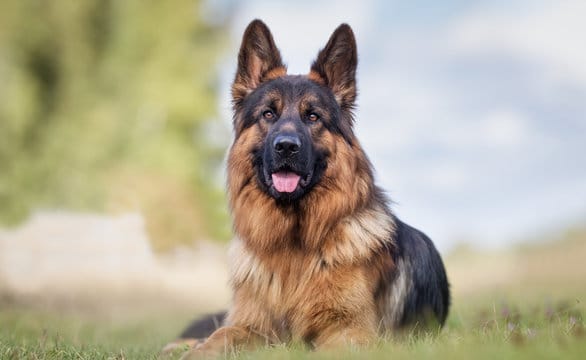
There are actually two show lines. West German show dogs are bred to the SV standard, still have to pass a working test to be bred in Germany, and are almost always black and red. American show dogs are bred to the AKC ring, run longer in the body with a more extreme rear, and are the shepherd most people in this country picture. If you want a calmer dog that still looks like the breed, the German show line is closer to a working line German Shepherd than the American one is.
Working Line German Shepherd vs Show Line: 7 Proven Differences
1. Purpose
Everything else on this list comes from this. One dog was bred for sixty years to do a job. The other was bred for sixty years to win a class. Neither goal is wrong, and both sides will tell you the other side ruined the breed. Ignore that argument and look at what each dog was selected for, because that is what you will live with.
2. Build
Stand them next to each other and you will not need us to point it out. The working line German Shepherd is leaner, squarer, with a back that is close to level and a rear that sits under the dog instead of behind it. The show dog is heavier through the middle with the sloped topline everyone has seen in photos. Show structure produces the big flying trot that wins in the ring. Working structure produces a dog that can trot for three hours and still clear a fence at the end.
3. Colour and coat
Show lines are mostly black and red or black and tan with a saddle. Working lines run to sable, solid black and bi-colour, in a plain, dense double coat. Freda, our female, is a dark sable. If that is the colour you have your heart set on, you are shopping working lines whether you meant to or not.
4. Drive and energy
This is the one that sends dogs back to breeders. A working line German Shepherd has a lot of drive and it shows up early. Show lines have some, with less intensity behind it. A family that wanted a handsome dog for walks and got a dog that needs a job will have a hard first year, and it is not the dog’s fault.
5. Temperament
A working line German Shepherd is confident, watchful and a bit serious. They bond hard to their own people and take a minute with strangers. Show dogs tend to be softer and more social. A softer dog is easier for a first owner and more forgiving of a loud, disorganised house. A harder dog is the one you want when something actually goes wrong at two in the morning. We wrote more about that distinction in our post on German Shepherd temperament.
6. Training
Both lines are smart. The working dog learns faster and forgets nothing, including the things you did not mean to teach. If jumping on the counter got a reaction once, that behaviour is now trained. The show dog is more biddable and puts up with an owner whose rules change by the day. Either way, plan on short daily sessions for the first two years. With a working line German Shepherd it is not optional.
7. Health
You will read online that working lines are healthier. That is only true when the breeder does the work. Hip and elbow dysplasia and degenerative myelopathy turn up in both lines. What is true is that a structure built for a day’s work tends to hold up better than one built for a ring, and that serious working breeders have tested for a long time because a dog with bad hips cannot do the job.
Whatever line you choose, get the parents’ registered names and look up their results yourself on the OFA database. Our post on German Shepherd health testing walks through which clearances matter and how to read them. If a breeder on either side cannot show you the results, that is your answer.
The Two Lines Side by Side
| Trait | Working line German Shepherd | Show line German Shepherd |
|---|---|---|
| Bred for | Nerve, drive, function | The written breed standard |
| Build | Lean, level back, strong bone | Heavier, sloped topline, more rear angle |
| Colours | Sable, black, bi-colour, black and tan | Mostly black and red or black and tan saddle |
| Drive | High, needs daily mental work | Moderate |
| Temperament | Confident, serious, one-family dog | Softer, more social |
| Training | Learns fast, needs consistency | Biddable, forgiving |
| Health | Hips, elbows, DM, usually well tested | Hips, elbows, DM, plus back and rear issues from structure |
| Suits | Active homes, sport, SAR, protection, service work | Family companions, showing |
How the Two Lines Split
The breed started with one man and a dog he bought at a show in 1899. Max von Stephanitz registered Horand von Grafrath as the first German Shepherd and wrote down the rule he wanted breeders to follow: a dog’s usefulness decides its worth. The early shepherds walked twenty or thirty miles a day behind sheep. In the First World War they carried messages and found the wounded, and the ones that lost their nerve under fire were pulled from breeding.
After the Second World War the breed was popular enough to support two goals. Some breeders kept selecting for the job, and the working line German Shepherd is their result. Others selected for the ring. Give that sixty or seventy years and you get a working line German Shepherd and a show line German Shepherd that share a registry and not much else. The trouble only starts when a family buys one thinking it is the other.
What Living With a Working Line German Shepherd Is Like
People picture a dog climbing the walls. Ours sleep on the kitchen floor most of the day. Freda will swim, hike, do a bite session and an hour of obedience in the morning, then come in and lie down while the kids step over her. The intensity is there when you ask for it and switched off when you do not, and that off switch is the thing we breed for hardest.
What you cannot skip is the mental side. The job can be small. Fifteen minutes of scent work in the yard, a tracking session on Saturday, an obedience class, a hike with a pack on. Fifteen minutes of that tires a shepherd more than an hour of fetch. Skip it for a week and the dog finds a job on its own, usually involving your baseboards.
Plan on a fenced yard as a starting point, not a plan. Plan on a dog that follows you to the bathroom for twelve years. Most families we place with think that last part is the best thing about the dog. A family that travels every other week and boards the dog will not.
Working Line German Shepherd Pros and Cons
Why families love them
- They learn faster than any dog you have owned, and they like the learning.
- Loyalty that borders on inconvenient. One family, for life.
- Real athleticism. Maine winters do not slow them down.
- Watchful without being reactive, when bred and raised right.
- The door stays open. The same puppy can end up a family dog, a search and rescue dog, a sport dog or a service dog.
Why they are wrong for some homes
- An hour or two of real activity a day plus mental work. Not most days. Every day.
- Consistent handling. A house where the rules change with whoever is home frustrates them.
- Wary of strangers by default. They need early, thorough socialisation to tell a guest from a threat.
- They do not do well being boarded half the month.
German, Czech and DDR Lines
Once you have settled on a working line German Shepherd you will run into three labels, and breeders will argue about them with you for as long as you let them. West German working dogs were shaped by IGP sport and police work. They tend to have high, flashy drive and a lot of fight in the bite work, and they are the most common working type in the United States.
DDR dogs came out of the East German border service: heavy bone, dark colour, big heads, a steadier and more serious temperament. Czech dogs came from the border patrol kennel Z Pohranicni Straze and sit close to the DDR type, with strong nerves and a very tight handler bond. Most modern pedigrees mix all three. Our sire is Czech, and we wrote about that background in our Czech German Shepherd post.
For a family the label matters less than the individual dog and whether the breeder is honest about drive. A DDR or Czech dog is often a slightly easier house dog than a pure West German sport dog. Often, not always. There are calm sport dogs and intense DDR dogs. Meet the parents.
How to Choose
Answer these five before you call anyone.
- How many hours a week will this dog really get? The honest number, not the one you wish were true. If it is a walk and a yard, get a show line.
- Do you enjoy training, or put up with it? A working line German Shepherd rewards people who like the mental side.
- Do you want the dog to have a job? Sport, tracking, search and rescue, protection or service work all point to working lines.
- Who else lives there? Both lines can be excellent with kids when raised right. A softer show dog forgives a chaotic house more easily.
- Is this your first dog? A first dog can be a working line German Shepherd. It should not be a working line dog from a breeder who will not match the puppy to you or pick up the phone afterwards.
If you are still not sure, call us. We would rather spend twenty minutes talking you into someone else’s dog than put one of ours in a house that cannot keep up with it. Our guide to choosing a German Shepherd breeder in New England covers what to ask whichever line you pick, and the German Shepherd puppy cost post explains what should be included for the money.
How We Breed Working Line German Shepherds at Pine Hill
We keep one breeding female and raise every litter in our house in Garland, Maine. Every puppy goes through Puppy Culture: early neurological stimulation from day three to day sixteen, sound and surface work as the eyes and ears open, early scent introduction, crate and car exposure, and the first clicker behaviours before eight weeks. Both parents hold full OFA clearances and the sire is DM clear, so no puppy from this pairing can be affected by degenerative myelopathy.
At seven weeks we temperament test every puppy. The puppy with the most drive in the litter goes to the home best suited for them each one to their own families based on personality! Why not let families choose their own? As the breeder I have spent every single moment of the 8 weeks old with our puppies, watching working and observing them. Most unexperienced dog owners won’t be able to determine a puppies temperament in just a 30 minute window of time.
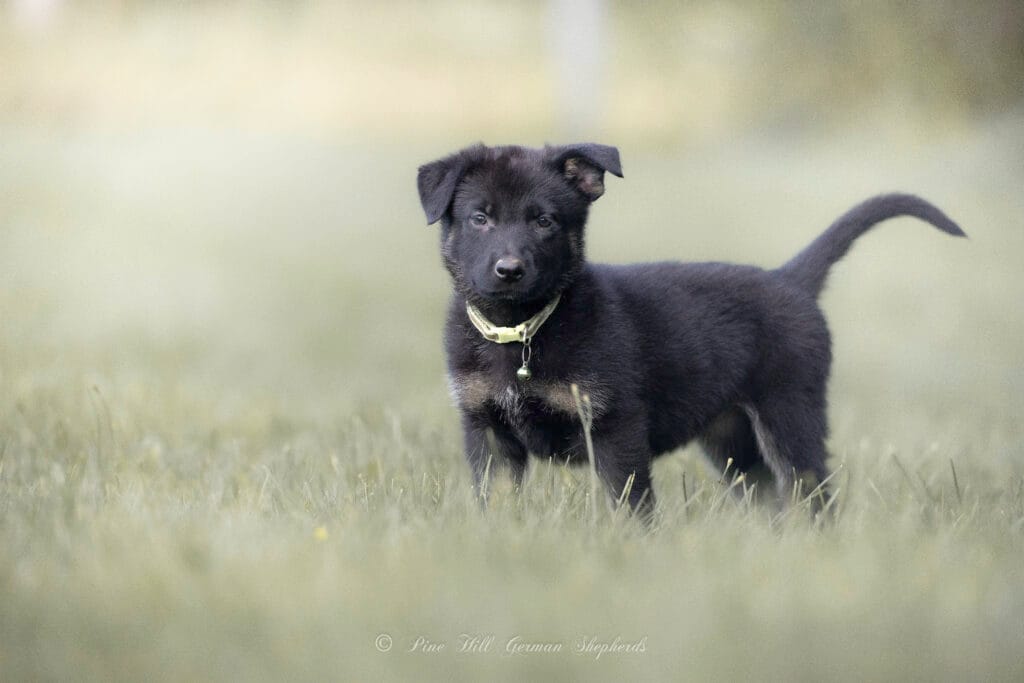
You can meet the parents on Our Shepherds, read about what we see in our working line German Shepherd puppies, check the current litter, or go straight to the Reserve a Puppy application. We answer every question ourselves, usually the same day.
Working Line German Shepherd FAQ
Are working line German Shepherds aggressive?
No. A well bred one is confident and stable. Aggression comes from weak nerves, bad breeding or no training, not from drive. The temperament that makes a dog good at protection sport is the same temperament that makes it safe in a house full of kids, because both depend on clear thresholds and quick recovery.
Can a working line German Shepherd be a family pet?
Yes. Most of ours are exactly that. The family has to give the dog structure, daily activity and something to think about. How the house is run matters more than how much dog experience you have.
Which line is better with children?
Either, if the dog is stable and the kids are taught to respect it. A softer show dog tolerates chaos better. A working dog bonds harder and is more protective, which some parents want and some do not.
Do working lines cost more than show lines?
Not usually. A well bred, health tested puppy from a small breeder in New England runs about the same either way. What changes is what the price includes: testing, early training, a written guarantee, and whether the breeder still answers the phone a year later.
Can I show a working dog, or work a show dog?
You can try either. A working line German Shepherd will not win a conformation class and a show dog will struggle at high level sport. Both can earn obedience, tracking, scent work and therapy titles, and the United Schutzhund Clubs of America trials both lines.
How much exercise does a working line German Shepherd need?
A working line German Shepherd needs an hour to two hours of real activity a day, and the mental part counts more than the miles. A show line will usually settle for less.
Where can I meet one before I decide?
Visit a breeder and meet the parents, or find a local IGP or scent work club and watch the dogs work and then settle. Families are welcome here in Garland, about an hour north of Bangor. Contact us and we will find a time.